Why Photosynthesis Is Fundamental to Life on Earth
Every breath we take is connected to a leaf somewhere. Photosynthesis — the process by which plants, algae, and some bacteria convert light energy into chemical energy — forms the foundation of life on Earth. It fuels ecosystems, generates the oxygen we breathe, and supports the food chains that sustain all animals, including humans. Without it, the planet would quickly become uninhabitable.
When we think of energy, we often picture electricity or fossil fuels, but the real energy source for nearly all life comes from the Sun. Photosynthesis is nature’s way of converting that sunlight into a usable form — sugars that plants use for growth and storage. Everything from a towering redwood to a blade of grass participates in this quiet, continuous transformation.
The Basic Equation: Turning Light Into Food
The overall process of photosynthesis can be summarized by one elegant equation: 6CO₂ + 6H₂O + light → C₆H₁₂O₆ + 6O₂. In plain terms, plants take in carbon dioxide from the air and water from the soil, then use sunlight to create glucose (a simple sugar) and release oxygen as a byproduct. This is not a single reaction but a sequence of tightly controlled steps happening in the chloroplasts — the green organelles inside plant cells.

The process is beautifully efficient. Only certain wavelengths of light, primarily red and blue, drive the reaction. This is why plants appear green: they reflect the unused green light while absorbing the rest for energy conversion.
The Role of Chlorophyll and Plant Cells
At the center of this entire operation is chlorophyll — the pigment molecule that captures light. Chlorophyll molecules are embedded within the thylakoid membranes of chloroplasts, acting as microscopic solar panels. When sunlight strikes these pigments, their electrons become energized, setting off a chain reaction that will eventually store energy in chemical bonds.
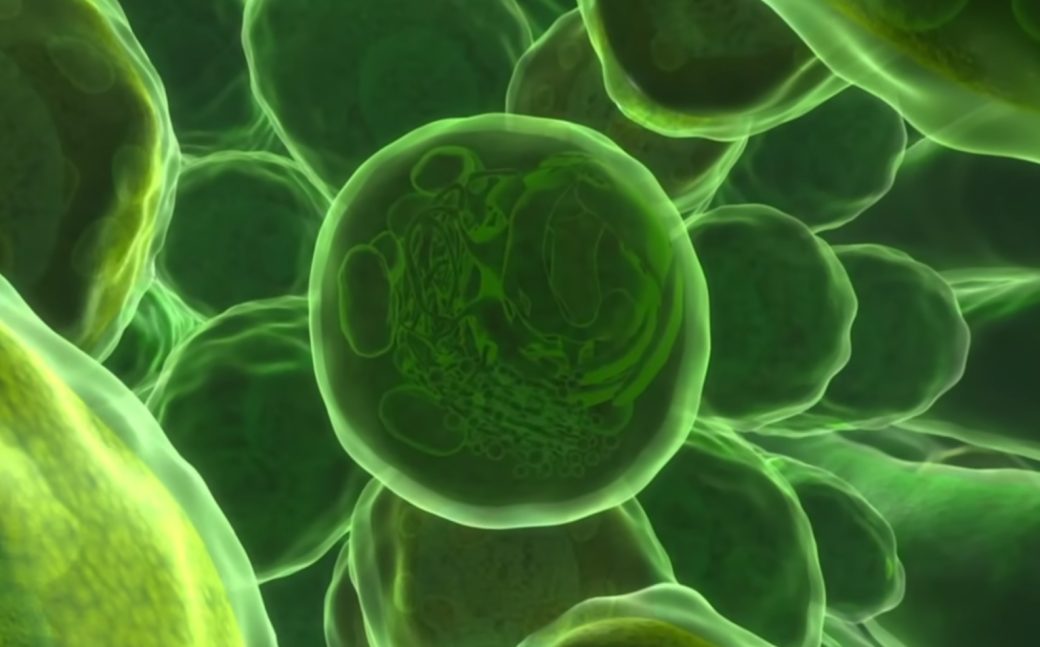
Plant cells are perfectly designed for this task. They house chloroplasts, maintain water through vacuoles, and regulate gas exchange through tiny pores called stomata. When you see a plant “breathing,” it’s opening and closing these pores to balance its intake of carbon dioxide and its release of oxygen — a constant, rhythmic exchange tied to photosynthesis.
Chlorophyll is often called “the green engine of life” — a pigment so powerful that nearly every living thing depends on its quiet work.
Light-Dependent Reactions: Capturing Energy from the Sun
The first phase of photosynthesis, called the light-dependent reactions, occurs within the thylakoid membranes. When light hits chlorophyll, it excites electrons that move through a chain of proteins known as the electron transport chain. This movement produces two key energy molecules: ATP (adenosine triphosphate) and NADPH, both essential for the next stage of the process.
During these reactions, water molecules are split apart — a process known as photolysis. This not only supplies the necessary electrons but also releases oxygen into the atmosphere. The oxygen produced during photosynthesis is the very same that sustains animals and humans, making this one of nature’s most elegant exchanges of life energy.
The Calvin Cycle: Building Sugars from Air
The second stage, known as the Calvin cycle, doesn’t require light directly. It uses the ATP and NADPH generated earlier to convert carbon dioxide into glucose. These reactions take place in the stroma — the fluid inside chloroplasts — and are orchestrated by a series of enzymes, including the famous RuBisCO, one of the most abundant proteins on Earth.
This stage is essentially plant chemistry at its finest: carbon atoms from CO₂ are fixed into organic molecules and gradually assembled into sugars. These sugars not only feed the plant itself but also travel through food chains to nourish everything from insects to humans. Every fruit, vegetable, and grain we eat traces back to this invisible process.
How Photosynthesis Shapes Our Planet’s Climate
Photosynthesis doesn’t just feed life — it stabilizes the planet’s climate. By absorbing carbon dioxide, plants act as massive carbon sinks, reducing greenhouse gases and moderating global temperatures. Forests, oceans, and even algae blooms play vital roles in this global carbon balance. When deforestation or pollution interrupts these processes, the effects ripple across ecosystems and climates.
Scientists now study photosynthesis not just for its biological significance but as a model for sustainable energy. The way plants capture sunlight and store it as chemical energy inspires new approaches to solar cells and carbon-neutral fuels. In essence, nature has already perfected what humans are still learning to replicate.
What Scientists Are Learning from Artificial Photosynthesis
Modern researchers are experimenting with artificial photosynthesis — technologies designed to mimic the natural process using catalysts and sunlight to split water or capture CO₂. The goal is to produce clean fuels like hydrogen or methanol without harming the environment. While the field is still developing, it represents one of the most promising frontiers in green energy.
In understanding photosynthesis, we’re not just decoding plant biology — we’re learning how to coexist with the planet more intelligently. The quiet work of leaves teaches us a lesson in balance: energy can be renewable, cycles can be closed, and even the smallest organisms can shape the fate of an entire world.