
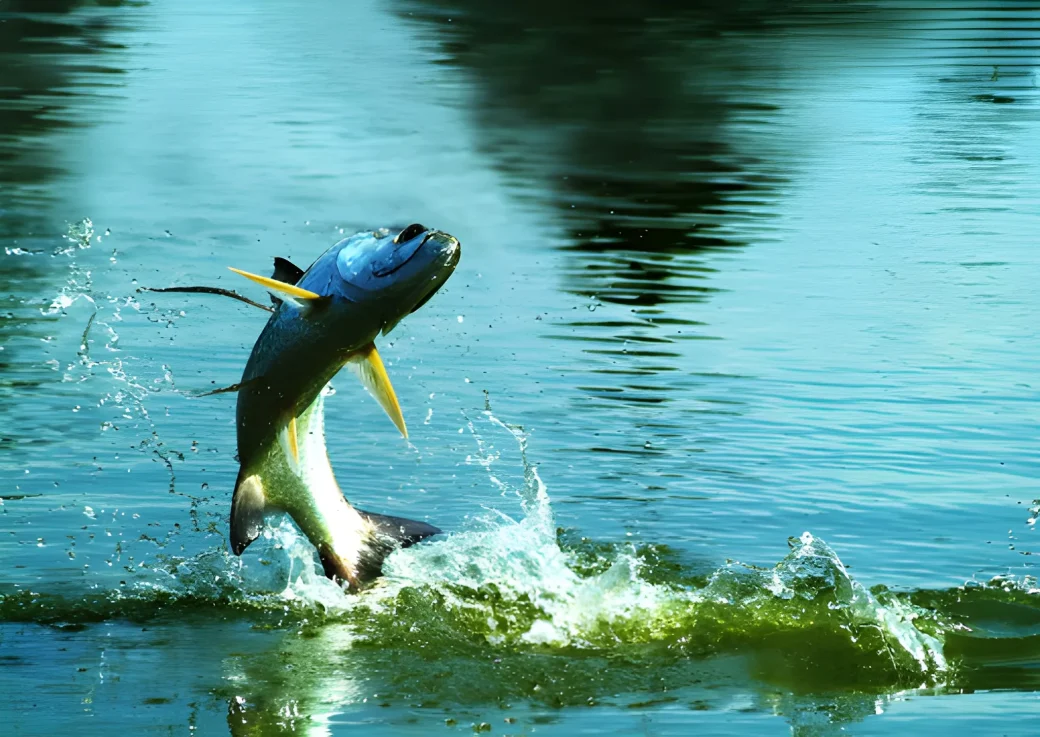
Biological Reasons Behind Fish Jumping
Fish leaping out of water may look spontaneous, but there are usually underlying biological reasons. Many species exhibit this behavior as part of their natural activity patterns. Some fish possess strong muscular systems that allow sudden bursts of movement, which appear random to human observers. These jumps can help them adjust their position, escape entanglement in vegetation, or even dislodge parasites. Additionally, some species have evolved this behavior to cope with oxygen fluctuations, moving briefly to surface layers or escaping low-oxygen areas. It’s a combination of instinct, physiology, and environmental triggers that prompts fish to breach the water surface seemingly at random.
Researchers studying salmon and trout have documented repeated jumping behavior, often linked to navigation and movement in rivers. The precision and frequency can vary depending on species and developmental stage. What may appear as a whimsical leap is actually a carefully tuned response to physiological needs and environmental pressures.
Predation Avoidance And Survival Strategies
One of the most critical factors driving fish to jump is predator avoidance. Fish have evolved a variety of escape mechanisms to survive in predator-rich environments. Jumping out of the water can confuse predators such as larger fish, birds, or mammals, providing a split-second advantage to escape. In some cases, the trajectory and height of the jump are optimized to maximize safety, as observed in certain freshwater species in North America and Europe. These sudden jumps can deter predation by making the fish less predictable, or by temporarily removing them from immediate danger. It’s an instinctual maneuver that has been honed through evolutionary pressures over millions of years.
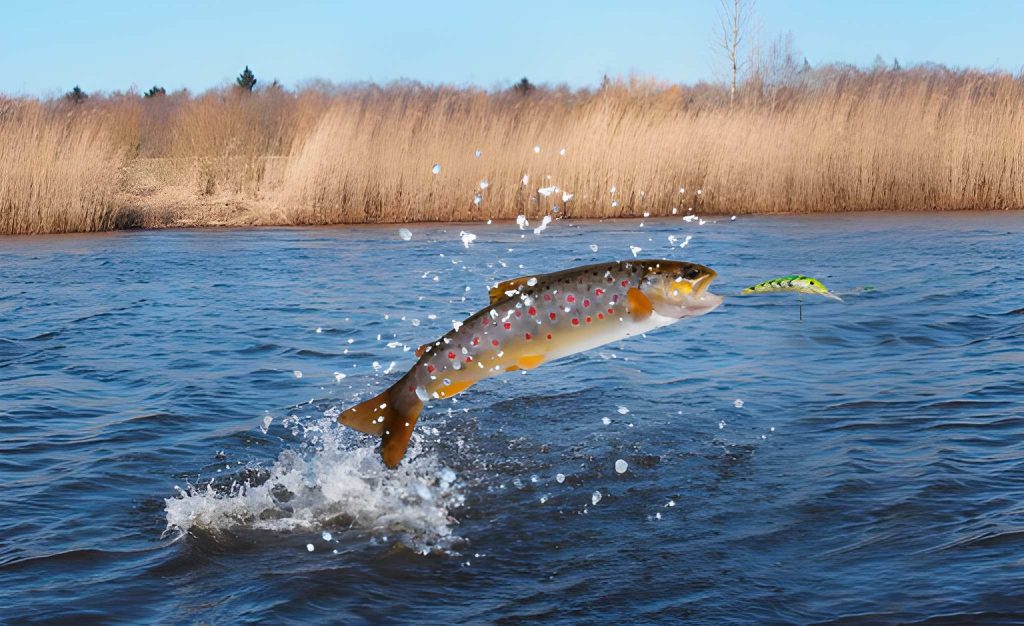
Studies on the leaping patterns of fish in lakes indicate that repeated jumping is often concentrated in areas where predator density is high, suggesting that risk assessment is a factor even if the jump looks random to human eyes.
Feeding Behavior And Hunting Techniques
Jumping is also closely related to feeding behavior. Some fish, like arowanas and certain trout species, leap to catch prey above the water surface, including insects or smaller fish. Even species not actively hunting may jump to access different water strata rich in plankton or other food sources. This vertical movement allows fish to exploit food resources unavailable to more sedentary individuals, demonstrating a strategic aspect to seemingly random jumps. In addition, fish may leap to dislodge themselves from entanglements while chasing prey, or to adjust their swimming patterns for better feeding efficiency.
Ecologists observing feeding patterns in European rivers have recorded high rates of leaping behavior during early morning and dusk, coinciding with insect activity, showing that feeding opportunities strongly influence jump frequency.
Environmental And Water Conditions Influencing Jumps
External factors like water temperature, oxygen content, and current speed can also trigger jumps. Fish may leap when oxygen levels drop, when water is too warm, or when currents interfere with efficient swimming. Sudden environmental changes, such as rainfall or shifts in water chemistry, can cause multiple fish in a shoal to jump simultaneously, which may appear random but is in fact a response to changing conditions. Seasonal patterns further influence these behaviors, with spawning migrations often accompanied by increased leaping activity. Human-influenced habitats, like fish farms or urban waterways, also show modified jumping patterns due to altered environmental parameters.
Understanding these triggers allows scientists and aquaculture managers to predict fish behavior more accurately, reducing stress and injury among farmed species.
Communication And Mating Signals Through Leaping
Leaping behavior is sometimes tied to reproductive and social communication. Male fish in certain species jump to signal fitness and attract mates, or to establish dominance in territorial displays. These jumps can transmit subtle cues through water vibrations or visual signals, which are interpreted by nearby conspecifics. Even in species not traditionally recognized for courtship jumping, occasional leaps may play a role in group coordination or social signaling. This shows that jumps are multifaceted, serving survival, feeding, and reproductive purposes simultaneously, rather than being purely arbitrary movements.
Observational studies in North American rivers have demonstrated increased jumping frequency during spawning season, highlighting the link between reproductive cycles and leaping behavior.
Observations From Rivers, Lakes, And Aquaculture
Documenting fish jumps across different habitats provides practical insights into ecological and behavioral patterns. In natural rivers and lakes, jumps often indicate predator presence, food availability, or environmental stress. In aquaculture systems, monitoring leaping behavior helps managers detect issues like poor oxygenation, overcrowding, or disease. By correlating jump frequency with environmental parameters, researchers can better understand species-specific needs and develop strategies to protect wild populations and optimize farmed conditions. Watching fish jump provides a window into the complexity of aquatic life, revealing instincts and adaptations that sustain survival across diverse ecosystems.