The Psychology Behind How We Cross Streets
When you step up to a crosswalk, you make dozens of subconscious decisions — when to move, how to read traffic, whether a driver will stop. Designers of pedestrian crossings study these small, human moments carefully. Behavioral psychology plays a major role in how crosswalks are planned. Factors like eye contact, waiting times, and perceived safety all influence design choices. A well-designed crossing encourages predictable human behavior and reduces risky improvisation.
Researchers have found that people often cross during gaps that feel “safe enough,” not necessarily when the light says to. That’s why markings, colors, and even textures on the pavement matter. Some cities, like London, use tactile paving to guide the visually impaired and subtly cue everyone else. It’s not just about paint — it’s about guiding human instinct in small, almost invisible ways.
Balancing Safety and Traffic Flow
Pedestrian crossings are designed not only to protect people but also to keep vehicles moving efficiently. Engineers must balance these competing needs. Too many signals can frustrate drivers and encourage unsafe crossings, while too few can endanger pedestrians. The key is timing and visibility. For example, shorter crossing distances achieved with curb extensions help pedestrians feel safer and allow for shorter signal cycles.
City planners use traffic data, pedestrian counts, and accident reports to decide where crossings should go. A simple shift of ten meters can change traffic patterns significantly. In places like Amsterdam, where cycling and walking dominate, timing is calibrated differently than in Los Angeles, where cars still rule. The balance between movement and protection defines every crosswalk’s identity.
Urban Design and the Role of Environment
Context matters enormously. A pedestrian crossing in a busy downtown core serves different needs than one near a school or suburban park. Designers take into account surrounding architecture, lighting, and even landscaping. The goal is to make crossings both visible and intuitive. For example, bright, high-contrast markings may fit urban centers, while smaller reflective studs might suit quieter areas with less visual clutter.
Good design doesn’t end with the paint. Crosswalks are often integrated into larger urban strategies: slowing traffic with narrower lanes, creating “complete streets,” and encouraging public transport use. These design choices make walking not just safer but also more pleasant and connected to the city’s overall rhythm.
The Impact of Technology on Crosswalks
Modern crossings increasingly rely on sensors, smart lights, and data. In Singapore and Tokyo, adaptive signal systems detect pedestrians and adjust timing automatically. Some cities are testing LED-embedded crossings that glow red or green along the ground — useful for people looking at their phones. The integration of technology has turned crosswalks into responsive systems that can adapt to real-time conditions.
However, technology is not a cure-all. Engineers warn that overreliance on automation can create confusion if the tech fails or if users don’t understand it. That’s why many cities adopt hybrid systems that combine traditional signals with modern sensors — bridging familiarity with innovation.
Cultural and Regional Differences in Design
Culture shapes how people use public spaces — and crossings are no exception. In Japan, pedestrians tend to follow signals strictly, so crossings can be narrower and more frequent. In parts of Southern Europe, where people rely more on eye contact and informal negotiation with drivers, designs often prioritize visibility over strict control. These regional nuances reflect how trust, habit, and law interact in everyday behavior.
Even color choice varies. In the U.K., the classic zebra pattern contrasts with the U.S. style of parallel white lines. Both serve the same purpose — to catch attention — but the design reflects different historical standards and public expectations. Every crosswalk is, in a way, a mirror of the society it serves.
Real-World Examples of Innovative Crossings
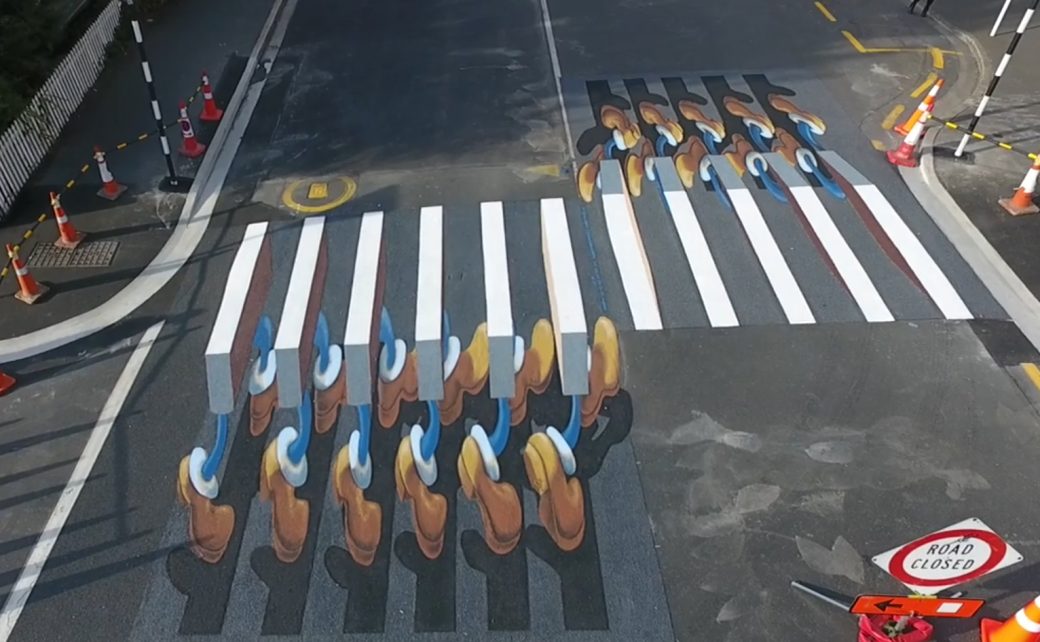
In Iceland, 3D-painted crosswalks create an illusion of floating bars to slow drivers down. In the Netherlands, shared-space concepts remove markings entirely to force eye contact between road users. These designs challenge conventional thinking by using perception and psychology rather than rules alone. They show that safety can come from understanding behavior, not just controlling it.
Ultimately, pedestrian crossings reflect the intersection — quite literally — of engineering, psychology, and culture. They remind us that safety isn’t only about infrastructure but about empathy: designing spaces where people feel seen and protected.