Why Fare Systems Exist: Balancing Cost and Access
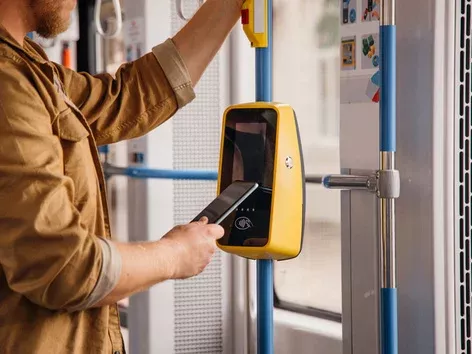
When you tap your card or buy a bus ticket, it’s easy to forget that someone had to decide how much that ride should cost. Fares are not just numbers pulled out of thin air—they reflect an attempt to balance two competing forces: covering the cost of running the system and keeping public transport affordable for everyone. Transit agencies constantly walk this tightrope. If fares are too low, budgets crumble. If they’re too high, ridership drops, and the system loses its purpose.
In most developed countries, fare policy is tied to the idea of accessibility. Governments want people to use public transport because it reduces congestion, pollution, and inequality. But these same systems are expensive to maintain—especially with aging infrastructure and fluctuating fuel prices. So, a fare is more than a price tag; it’s a reflection of a city’s priorities and values.
The Role of Local Governments and Transit Authorities
Public transportation rarely operates as a private business. Local governments, often through transit authorities, play the leading role in fare decisions. They analyze economic data, consult with the public, and sometimes respond to political pressure. In London, for example, Transport for London (TfL) reviews fare structures annually, balancing operational needs with mayoral policies and national funding guidelines.
Decisions often come down to compromise. Politicians may push to freeze fares before elections, while operators warn that doing so jeopardizes service quality. In cities like New York, the Metropolitan Transportation Authority (MTA) holds public hearings before adjusting prices, ensuring transparency but also inviting heated debate. It’s democracy at work—on wheels.
How Operating Costs and Subsidies Shape Pricing
Behind every fare increase or discount is a spreadsheet filled with costs. Driver salaries, vehicle maintenance, energy consumption, and insurance all add up. Most transit systems can’t cover these expenses through ticket sales alone. That’s where government subsidies come in. In Europe, subsidies can cover up to 70% of operational costs; in the U.S., it’s often closer to 40–50%.
Farebox recovery—the percentage of operating costs covered by fares—varies dramatically by city. Hong Kong’s MTR boasts over 90%, thanks to profitable property investments tied to stations. Meanwhile, many North American systems hover around 25–35%. These differences show how financial structure, not just policy, determines what commuters pay.
The Influence of Technology and Data on Fare Models
The era of paper tickets is fading fast. Contactless payments, mobile apps, and data analytics now shape how fares are set. Dynamic pricing—similar to airline models—is slowly entering public transport. In Singapore, for instance, peak-hour data helps determine flexible pricing designed to spread passenger flow throughout the day.
Technology also improves fairness. Systems can automatically calculate the cheapest fare after a day’s travel, ensuring no passenger overpays. Yet the reliance on digital tools raises questions of access for the elderly or low-income riders without smartphones or credit cards. Fare policy, therefore, becomes a digital equity issue as much as an economic one.
Regional Examples: From London to Los Angeles
Different regions take different approaches. London’s fare zones encourage living closer to the city center, while Los Angeles recently launched a pilot flat-fare system to simplify payments and attract new riders. In Paris, the Navigo pass offers unlimited monthly travel, heavily subsidized by employers and government alike. Meanwhile, smaller European cities like Tallinn, Estonia, have gone even further—making transit free for residents to boost ridership and reduce emissions.
Each approach mirrors local priorities. Where environmental policy dominates, lower fares encourage sustainable travel. Where budgets are tight, fare hikes become inevitable political battles. There’s no one-size-fits-all model because every city tells its own story through its fare chart.
Social and Environmental Considerations Behind Fare Decisions
Fares are also moral questions: who gets to move freely through the city, and at what cost? Economists often argue for efficiency, but public transportation planners think in terms of fairness. Discounted fares for students, seniors, and low-income groups are common, yet they require careful design to avoid financial strain on agencies.
Environmental impact plays an equally vital role. Lower fares can shift commuters away from cars, reducing carbon emissions and urban noise. Copenhagen and Vancouver, for example, integrate fare policy directly into climate strategies, treating it as a lever for sustainability rather than just a budget tool.
The Future of Fare Policies: Toward Fairer Public Transit
As cities evolve, so do their transportation models. Many experts envision a future where fares are replaced by universal mobility credits or even fully subsidized systems funded by congestion or carbon taxes. Experiments in Vienna and Luxembourg show that nearly free or free public transport can increase ridership dramatically without collapsing the system—if managed wisely.
“A city’s fare policy is its social contract in motion.” — Urban planner Elise Moreno
Ultimately, how fares are set reveals how much a city values movement as a public right versus a paid service. The question isn’t just how much a bus ride costs today, but what kind of society we build when we decide who can afford to ride.