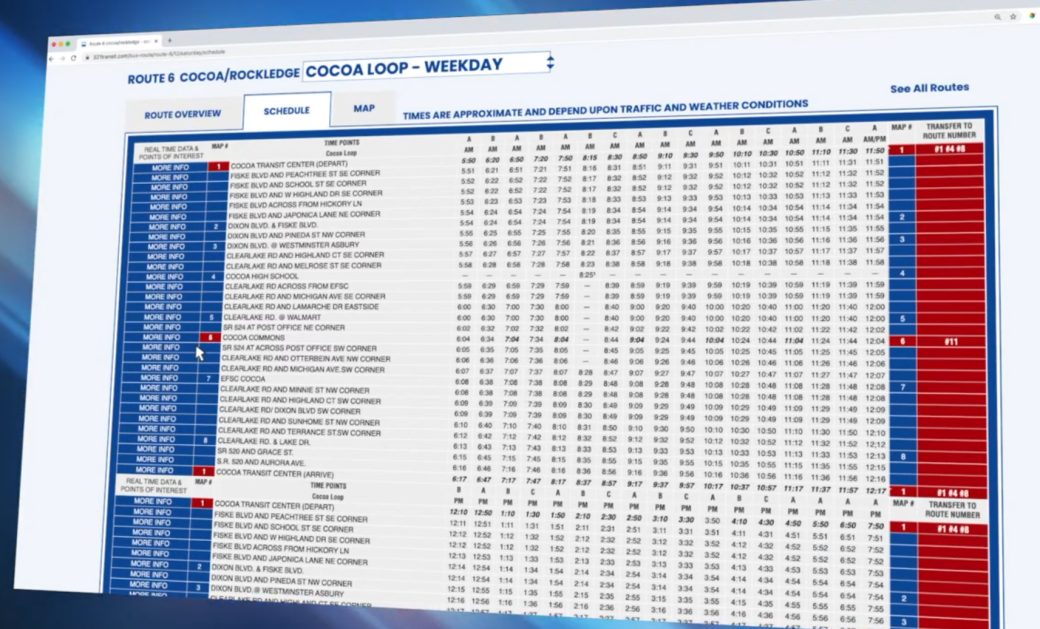
The Hidden Logic Behind Every Bus and Train Timetable
Every time your train arrives right on the minute or your bus rolls up at its usual time, it’s the result of thousands of calculations. Public transportation schedules are not created by guesswork—they’re the outcome of a detailed process balancing efficiency, cost, and convenience. Transit planners rely on ridership data, urban geography, and even local work hours to design timetables that keep people—and cities—moving smoothly.
For large metropolitan areas, the task resembles a living puzzle. One change in a single route can ripple through an entire system, affecting connections and capacity. In smaller towns, the approach is more personal but no less complex: ensuring that residents have reliable access to work, school, or healthcare. In short, scheduling is a blend of mathematical modeling and local empathy.
Who Decides the Frequency and Routes
Behind every timetable stands a public agency, often working with private contractors, data analysts, and community boards. In cities like London or Toronto, transit authorities conduct studies on passenger flow, peak hours, and even population projections. They examine how many people board at each stop, how long trips take, and which routes overlap.
Then comes the hard part—deciding frequency. Too few buses and people complain about delays; too many, and the system becomes financially unsustainable. “We’re always walking a tightrope between service and cost,” explains a former planner for Transport for London. In most systems, a mix of automated modeling and human intuition guides the final decision, ensuring the timetable serves real people rather than just fitting into an algorithm.
How Data and Algorithms Shape Public Transport Timing
Modern scheduling relies heavily on data science. Sensors in buses and trains collect real-time data about ridership, travel times, and bottlenecks. GPS systems feed this information into central databases, allowing planners to visualize traffic patterns across days, weeks, and seasons. Machine learning models can even predict when ridership will spike—like after concerts or sporting events.
In Singapore, for example, algorithms analyze millions of commuter data points daily to update bus intervals automatically. European cities are adopting similar approaches, blending predictive analytics with local input. The goal isn’t just to run vehicles efficiently but to make the entire system responsive to how people actually move through their cities.
Balancing Efficiency, Cost, and Human Needs
Numbers tell part of the story, but transport is ultimately about people. A bus arriving every 10 minutes might be efficient, but if it misses key times—like school drop-offs or shift changes—it’s ineffective. That’s why planners still rely on public consultation and surveys. In Vancouver, local residents were asked how schedule changes affected their daily routines. The results led to subtle but impactful shifts—like extending evening services by just 15 minutes to match workers’ hours.
Economics also set hard limits. Each additional bus or train costs money, fuel, and staff hours. Budget constraints often force compromises, which is why service quality can vary dramatically between affluent and underfunded areas. Finding a humane balance between fiscal discipline and equitable access remains one of the toughest challenges in public transport.
The Role of Real-Time Technology and Passenger Feedback
Technology has transformed not only how schedules are made but how they’re experienced. Real-time tracking apps, digital displays, and GPS-based alerts mean schedules are no longer static. Passengers can see delays or route changes instantly, while planners use that same data to adjust performance metrics.
Feedback loops are becoming a cornerstone of urban mobility. Cities like Helsinki and New York integrate rider feedback directly into service dashboards. When enough passengers report recurring delays or overcrowding, planners can adjust future timetables within weeks, not months. The once-rigid schedule is now an evolving, data-driven conversation between city and citizen.
When Schedules Fail — and What Happens Next
Even the best-designed systems fail sometimes. Unexpected traffic, mechanical breakdowns, or extreme weather can throw timetables off balance. When that happens, crisis management kicks in. Dispatchers reroute vehicles, deploy backups, and update public alerts. Post-event reviews then analyze what went wrong and how to prevent repeats.
In Paris, after a winter storm disrupted tram lines for two days, RATP used the incident to improve predictive modeling for extreme weather. Such adaptability is key in a world where climate and urban density are changing faster than ever. A modern transport schedule must be resilient as well as efficient.
The Future of Dynamic, Demand-Responsive Public Transport
As cities grow smarter, the future of transport scheduling will likely be flexible rather than fixed. Some pilot programs in Sweden and Canada already use “on-demand” microtransit systems—buses that adjust routes and timing based on live demand. Instead of adhering to rigid timetables, they respond dynamically, like ride-sharing but public.
“A good transit schedule feels invisible—it simply works. But behind that ease is a masterpiece of planning.” — Urban Mobility Analyst, Berlin
This evolution reflects a larger truth: transportation isn’t just about moving people from A to B, but about aligning systems with real human rhythms. The science behind your morning commute may be complex, but its goal is simple—to make sure the city keeps its promise of movement, no matter how much it changes.