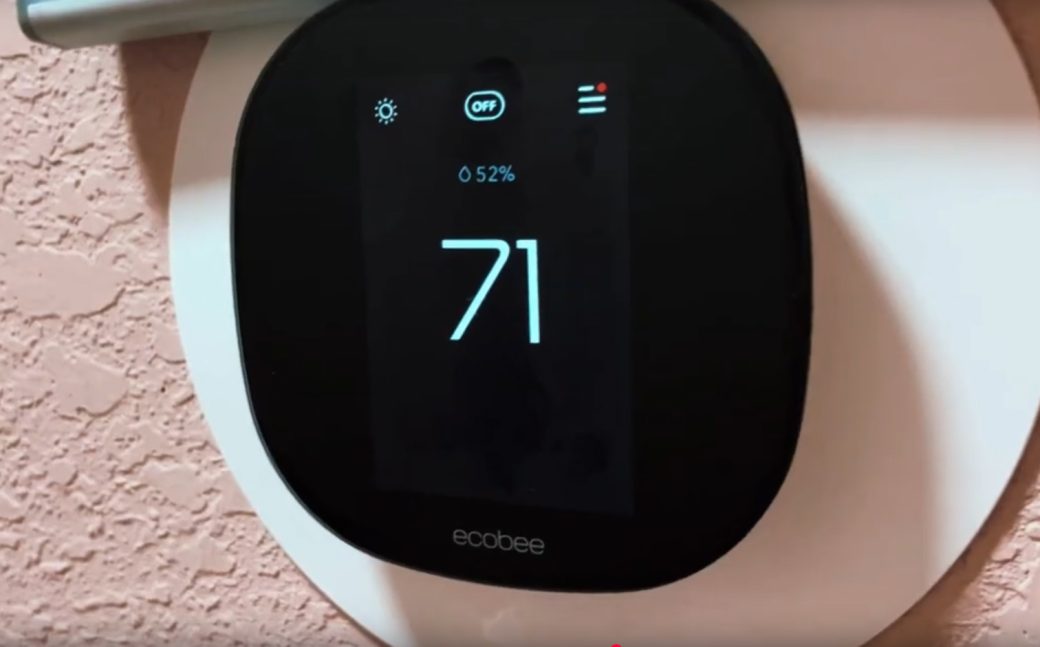
Why Your Thermostat Feels Almost “Alive”
There’s something slightly uncanny about a device that seems to know you better than you know yourself. One morning you wake up, and your living room is already warm. You didn’t touch anything — your smart thermostat just anticipated your movement. This isn’t magic; it’s data science blended with behavioral psychology. Devices like Google Nest or Ecobee analyze patterns in temperature adjustments, motion sensors, and even local weather forecasts to create a model of your comfort habits.
Smart thermostats don’t just “follow orders” — they build a statistical portrait of your daily life.
Over time, they start to recognize when you usually leave for work, when you return, and even how long it takes for your room to reach the desired temperature. The more you use it, the more accurate it becomes — until the house itself feels tuned to your rhythm.
The Sensors and Data That Power Adaptation
The learning process starts with sensors. A typical smart thermostat has motion detectors, temperature and humidity sensors, and sometimes even geolocation access via your smartphone. When the device notices movement in the morning or a sudden absence in the afternoon, it logs that data.
Some systems cross-reference it with external data — sunlight intensity, outdoor temperature, or utility rates. In effect, your thermostat is constantly mapping not just your house, but your habits within it.
Manufacturers have fine-tuned this feedback loop to balance comfort with conservation. For example, Ecobee uses multiple room sensors to detect occupancy and adjusts only those spaces that are in use. The result is efficiency that feels almost intuitive.
Algorithms That Predict Your Comfort Zone
Machine learning is the quiet genius behind the glass screen. The thermostat’s software uses pattern recognition algorithms similar to those found in recommendation systems — the same logic that helps Netflix guess your next favorite show.
At first, it reacts to your inputs. But after a few weeks, it begins to predict: if you consistently turn the heat up at 7 a.m., it learns to do it automatically. When connected to the cloud, it can even refine predictions using anonymous data from thousands of other users in similar climates.
Prediction, not reaction, is the true milestone of a “smart” home.
Still, this intelligence is probabilistic — it’s never 100% sure. So the system keeps updating its model, learning incrementally with every adjustment or period of inactivity. That’s why new thermostats often feel “off” for the first few days — they’re still learning who you are.
Privacy and the Ethics of Data Collection at Home
The convenience of a personalized climate comes with an invisible trade-off: data. Your thermostat knows when you’re home, when you sleep, and even how consistent your schedule is. It might not sound intimate — until you realize that patterns of occupancy are valuable to advertisers and insurers alike.
Most major brands anonymize data and promise not to sell individual records, but concerns remain. A 2023 study from the University of Toronto found that smart home devices often share more metadata with cloud servers than users expect. While this doesn’t always mean privacy violations, it raises questions about who truly owns your behavioral data.
The future of smart homes will depend on how transparent these companies become — and how much control users can reclaim.
How Smart Thermostats Actually Save Energy — Or Don’t
Smart thermostats are often marketed as green tech, promising up to 20% savings on heating and cooling bills. Real-world results vary. Studies by the American Council for an Energy-Efficient Economy suggest that the actual average savings range between 8–12%.
Why the gap? Human behavior. A thermostat can predict your comfort zone, but it can’t account for a family argument about whether 21°C feels “too cold.” Even so, the automation encourages better habits — like letting the house cool naturally while you’re away.
The point isn’t perfection. It’s the subtle shift from manual control to shared intelligence — where both human and machine negotiate comfort.
Real-World Examples From Major Brands
Google’s Nest Learning Thermostat is perhaps the best-known example. It uses a built-in motion sensor, Wi-Fi, and a learning algorithm to create a heating schedule that fits your lifestyle. Over time, it builds a “pattern of presence” — when no one’s home, it automatically lowers the temperature.
Ecobee takes a slightly different approach, integrating voice assistants and multi-room sensors. It learns not just when you’re home, but where. Some models even use Smart Recovery, a feature that starts heating before you wake up, reaching your desired temperature just in time.
Other brands, like Honeywell and Tado, focus on energy dashboards and predictive weather adaptation. Each uses machine learning, but their philosophies differ — from automation to user transparency.
What’s Next: Emotional Intelligence for Your Living Room
The next frontier isn’t just smarter algorithms — it’s emotional intelligence. Companies are experimenting with sensors that detect stress or discomfort based on voice tone or facial expression. Imagine a thermostat that senses tension and cools the room slightly, or brightens the light to lift your mood.
We’re moving toward a future where home technology isn’t just reactive or predictive — it’s empathic. Whether that’s comforting or unnerving depends on how much we’re willing to let our walls listen.