Why Pedestrian Detection Is Vital for Self-Driving Cars
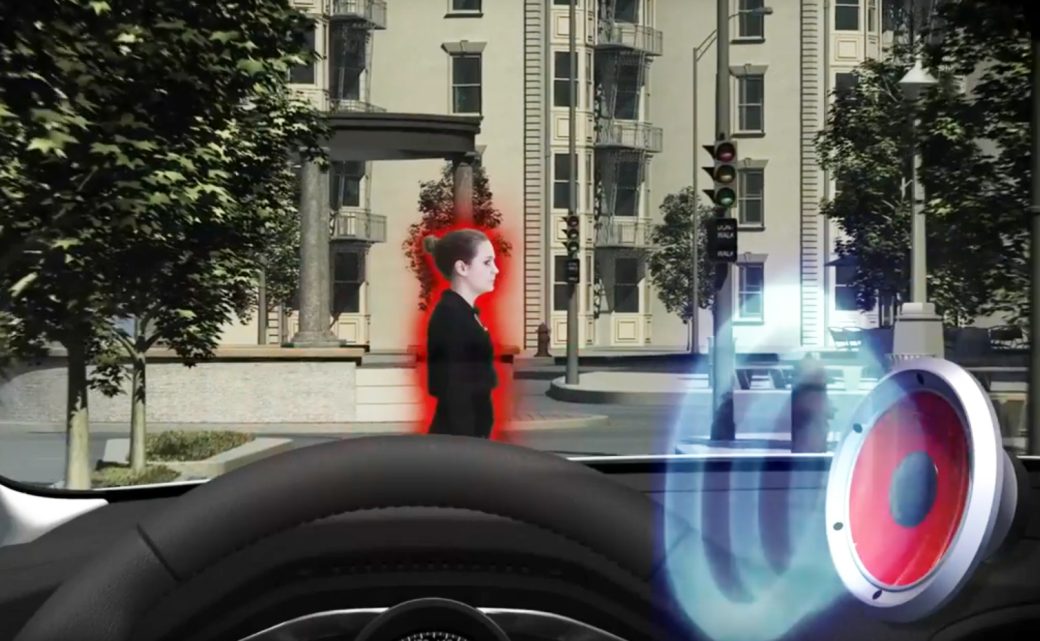
In a world where cars pilot themselves, the ability to reliably detect and react to a walking person is nothing short of essential. Every autonomous vehicle must discriminate between static objects, road signs, other cars — and living, moving human beings. A failure to identify a pedestrian can lead to tragic consequences, so engineers build multiple overlapping systems that reduce error and build trust.
Pedestrian detection isn’t just about seeing — it’s about understanding context. Is someone stepping off a curb? Are they hidden behind a parked car? Will they dart into the street? The system must account for all that in milliseconds. In practice, detection informs braking, path planning, and emergency maneuvers.
“Spotting people reliably is among the hardest tasks for an autonomous vehicle — more so than lane-following or obstacle avoidance,” notes researchers at Waymo.
Thus, the problem is framed as recognition + prediction. Spotting someone is only half the battle; knowing which way they’ll move pushes the car to make safe decisions.
Sensors on the Lookout: Cameras, LiDAR, Radar, Ultrasound
No single sensor is sufficient. Self-driving cars deploy a sensor suite: high-resolution cameras for color and texture, LiDAR for 3D depth, radar for velocity detection in bad weather, and ultrasound for very close range. Each contributes a slice of the puzzle.
Cameras excel at classifying objects — distinguishing humans from signs or bicycles. But they struggle in darkness or heavy rain. LiDAR sends out laser pulses and measures echo times to build a 3D point cloud, giving precise shape and distance data. Radars are less precise spatially but penetrate fog, rain, and snow. Ultrasound fills gaps at close range, such as in parking lots.
These sensors overlap zones: where camera confidence drops, LiDAR or radar can pick up slack. The redundant approach increases reliability — no single point of failure.
Perception Algorithms: Segmentation, Object Detection, Tracking
Once sensors collect data, perception algorithms interpret it. The first step is **segmentation**: dividing the scene into regions (road, sidewalk, vegetation). Next is **object detection**, using machine learning models to spot humans as bounding boxes or masks. Once identified, **tracking** follows their motion across multiple frames.
Popular methods leverage convolutional neural networks (CNNs) or more advanced architectures like transformers. They classify each candidate region with confidence scores. The system often rejects uncertain detections or fuses them with other sensor data to reduce false positives or negatives.
Tracking requires temporal consistency — the system must maintain identity of a detected person over time and filter jitter or sudden jumps. Prediction modules then estimate future positions based on observed velocity and direction.
Fusing Data: Combining Sensor Streams for Reliability
Sensor fusion is the art of merging data into a coherent understanding. The system aligns data spatially (knowing where each sensor is mounted) and temporally (synchronizing timestamps). Each sensor’s data is weighted by confidence and conditions.
For instance, if a camera sees a human shape but LiDAR data in that area is sparse (perhaps due to glare or reflections), the system might lower confidence or wait for confirmation. In poor visibility, radar or LiDAR may dominate. Fusion reduces blind spots and improves robustness.
Some systems use probabilistic frameworks like Kalman filters or particle filters to combine uncertain inputs and predict likely states. Over years of testing, manufacturers calibrate how much each sensor contributes under different conditions.
Edge Cases: Crowded Streets, Occlusions, Night and Weather
The real world is messy. Pedestrians may walk behind parked vehicles, push strollers, or cluster in crowds. At night, their outlines blur. Rain and snow distort sensor returns. These are “edge cases” that test detection systems to their limits.
To handle occlusions, systems rely on partial cues — a leg, movement over time, orferences from context (a sidewalk path). Predictive models can infer trajectory even when a person momentarily disappears behind an obstacle. Training on varied datasets (urban, rural, different lighting) helps systems generalize.
Manufacturers conduct extensive real-world testing — driving in city centers, at dusk, in storms — to uncover failure modes. Data from these tests feed back into model retraining so the system learns from its mistakes.
Learning from Mistakes: Continuous Tuning and Real-World Feedback
No model is perfect out of the factory. Self-driving systems gather logs from millions of miles of road testing. Edge-case scenarios — e.g. someone in dark clothing stepping off a curb — get flagged by human annotators, retrained into the model, and pushed via updates to all vehicles.
Simulations also play a major role. Virtual environments generate rare or dangerous scenarios that are hard to capture in real life. Designers simulate pedestrian behavior — children chasing balls, sudden crossing — and stress-test recognition systems before deploying updates.
Thus, over time, a self-driving car becomes better at detecting pedestrians than its initial version ever was. The vehicle evolves with the world.
What Lies Ahead: Predictive Behavior and Human-Centric Safety
Future improvements lie in deeper prediction: not just spotting people, but understanding intent. Is a walker about to cross mid-block? Will they turn away? Models are being built to detect body posture, gaze direction, and stride changes to anticipate movement.
Another frontier is “behavioral fusion” — combining pedestrian detection with traffic rules, crosswalk signals, and crowd dynamics to better reason about safe trajectories. The most advanced systems will prioritize human safety over rigid path efficiency.
The ultimate benchmark won’t be flawless detection — it’ll be failure modes we never even see.
In the end, detecting pedestrians is not about perfect vision, but about empathetic decision-making — machines that respect human life in every corner, lane, and crosswalk.