The Back Row Isn’t Just Another Row
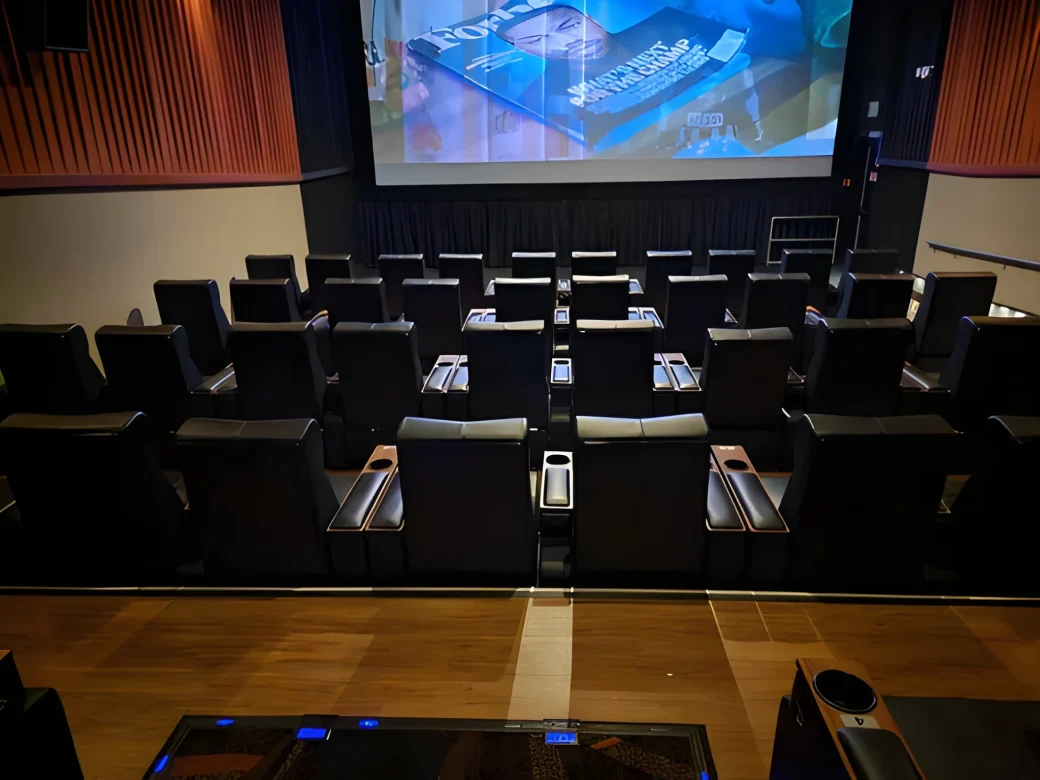
The last row has an almost mythical status in cinema culture. For some, it’s the “privacy row,” for others — the worst place to sit because it’s furthest from the screen. But in many theaters, especially in North America and parts of Europe, those seats remain empty by policy. This is not a random quirk; it’s part safety, part acoustics, part people management.
When I talked to cinema employees in Toronto and London while researching this piece (informal conversations with staff, not official statements), the pattern was surprisingly consistent. They all pointed to the same mix of reasons: fewer disruptions, cleaner sound, and easier crowd control. None of this is spelled out on a poster, but it’s quietly embedded in how many theaters operate.
There’s also the historical side of it. Older cinemas often had technical limitations — projectors mounted in ways that made the last few rows less comfortable or misaligned. Some of those habits stuck around even after modern upgrades.
Managing How People Behave in Dark Rooms
One of the most practical explanations is simple: people behave differently in the last row. Staff from large chains in the U.S. and UK have acknowledged this in interviews with outlets like The Guardian and Variety — the back row tends to attract more talking, phone use, and general distraction. Cinemas want the majority of viewers to have a smooth experience, so reducing “problem corners” helps.
Another factor is visibility. Ushers can’t monitor the very back as easily. Theaters often prefer to seat people in rows that are easier to supervise, especially during busy showings. Some chains even experiment with staggered seating patterns — filling middle rows first — to reduce noise hotspots.
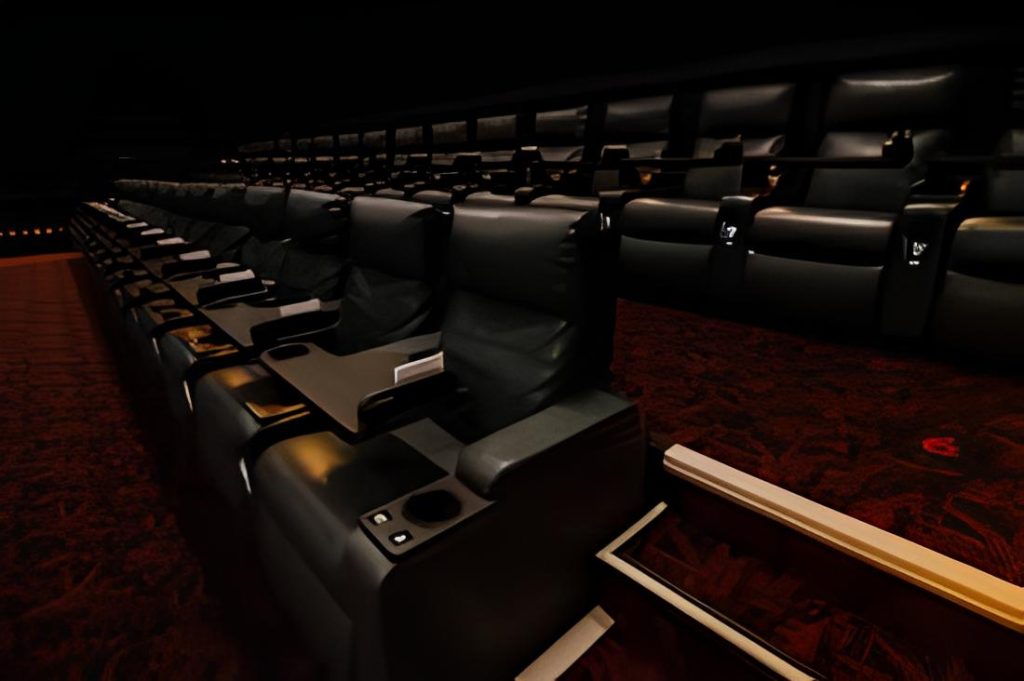
It’s not about treating viewers like children; it’s about minimizing the ripple effect of disruptions. One noisy group in the back row can ruin the experience for dozens of people below.
Safety Rules and Emergency Path Flow
This is one of the least discussed but most important reasons. Fire safety codes in many cities define how much space must be left near walkways and rear exits. Cinemas in California, New York, Germany, and the UK are often required to keep portions of the back area unobstructed so that evacuation routes remain clear. Not every cinema interprets this as keeping the full last row empty, but many adopt a stricter policy to simplify compliance.
There’s also the matter of accessibility. In some modern theaters, the very back row backs directly onto wheelchair and companion seating zones. Leaving the row empty avoids crowding those spaces and lets people enter or exit without squeezing past seated viewers.
Because regulations vary by region, you can see different patterns: in Canada, many theaters keep only the corner seats empty; in the U.S., some chains leave full rows unused during low-traffic screenings.
The Technical Side: Sound, Projection, and Angles
Most moviegoers don’t think about the engineering behind cinema audio, but acoustics is one of the largest factors in why seating patterns matter. The last row is often closest to rear speakers, which can create an unbalanced or too-loud listening experience. Keeping the row empty protects those sitting below from distorted sound bouncing off the back wall.
Projector angles also play a part. In older auditoriums, the last row may be below the projection beam path, meaning any standing or movement could interrupt the picture. Modern laser projectors solved much of this, but the seating habits they inspired never fully disappeared.
Some theaters also run calibration tests assuming the last row is unoccupied. If those seats suddenly fill, the audio balance changes enough to impact the experience.
Comfort, Privacy, and Premium Experience Choices
There’s a cultural angle too. Cinemas in the U.S. and UK often design premium seating to start several rows ahead of the back wall. The empty row serves as a buffer that makes the premium seats feel more private and exclusive.
In some European cinemas, unused last rows are a legacy from earlier decades when smoking sections were removed. Those rows were never reinstated into general seating after renovations.
And occasionally, it’s about creating a calmer visual field. People moving in the very top row can distract others, especially in theaters with tall seating gradients. Empty seats remove that problem entirely.
Some cinemas openly acknowledge technical reasons; others simply follow old architectural habits that still shape the viewing experience today.
Regional Differences and the Quiet Policies Behind Them
In the U.S., several cinema chains have confirmed that their occupancy policies vary by auditorium size and staffing levels. In Canada, Cineplex spokespeople have mentioned that seating models change depending on whether an auditorium is using recliner setups or traditional rows. In Europe, especially France and Germany, fire codes are a more common reason for leaving rows unassigned or empty.
None of these policies are secret, but they’re also not marketed. Cinemas rarely want to explain that certain seats offer worse sound or attract more disruptive behavior. Instead, they simply stop selling them — and most people never notice.
The result is a cleaner, more predictable viewing environment, shaped by equal parts engineering, safety, and human behavior.