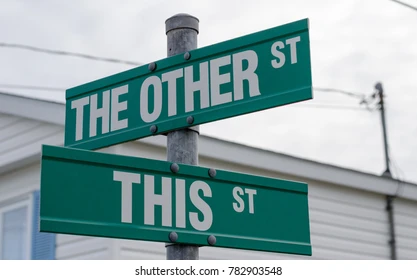
Why Repeated Street Names Appear in Modern Urban Layouts
Anyone who has lived in a large city has likely experienced the confusion that comes with repeated street names. You type an address into a map app and suddenly realize the city has two, three, or even four versions of the same “Maple Street” scattered across different districts. This isn’t a glitch — it’s a very common feature of urban development. Street-name duplication often emerges not from carelessness but from historical layers, planning decisions made decades apart, and the simple fact that cities grow in uneven, sometimes chaotic ways. Urban planners have documented that naming conventions usually evolve locally, which means that each district, at the time of naming, operated with its own rules and expectations.
In many cities across the U.S., Canada, Australia, and Europe, early neighborhoods were named long before a centralized authority managed the entire urban area. These early names tended to follow simple conventions — trees, numbers, local landmarks — and when cities expanded, those smaller areas were absorbed with their existing labels intact. Because renaming streets can disrupt residents, emergency services, and businesses, many municipalities choose to preserve legacy names, even if they create overlap.
Even today, naming decisions can remain decentralized. Some cities allow developers to propose names for new subdivisions, and unless the name conflicts with another inside the same administrative district, it may be approved. Over time, those isolated decisions accumulate, and repeated street names become a normal part of the city’s layout.
How City Growth, Annexation, and Mergers Create Duplicated Names
One of the most documented causes of repeated street names is annexation — the process by which a large city absorbs nearby towns or villages. Each annexed area typically brings along its own fully developed naming structure. Urban development researchers note that cities like New York, Chicago, London, and Toronto expanded by incorporating dozens of independent municipalities over the course of their history. Those smaller communities had no reason to coordinate names with each other before annexation, so duplicates became inevitable.
Annexation is only one part of the picture. Mergers between municipalities, especially during the 19th and early 20th centuries, often preserved existing names to maintain the identity of the absorbed territory. Historical societies in several major cities have documented cases where renaming proposals were rejected due to local resistance. Residents often felt that street names were tied to community heritage and didn’t want them altered even after becoming part of a larger urban area.
Another factor is the way suburbs grew in the post-war era. Many were planned independently, sometimes by private developers, who reused familiar names — Oak, Pine, Cedar — because they were considered appealing and neutral. Since there was no overarching urban plan at the regional level, duplication naturally multiplied as suburbs merged back into the main city grid.
The Role of Historical Neighborhood Identity and Local Politics
Street names aren’t just labels; they often reflect community identity. Researchers who study municipal history note that names can carry cultural or symbolic weight. Keeping old names is seen as a way to maintain continuity as the neighborhood changes. In places with strong cultural identities — for example, areas shaped by waves of immigration — local leaders may resist renaming even when the city government suggests it. This tension between local tradition and urban management contributes to the persistence of duplicate names.
Political considerations also play a role. Renaming streets is notoriously controversial. When cities propose eliminating duplicates, public hearings often reveal how attached people can be to the street name they’ve grown up with. City councils sometimes avoid renaming to prevent backlash, especially when the duplication hasn’t caused severe logistical problems.
Furthermore, many naming policies prioritize avoiding duplication within a single emergency service zone rather than across the entire metropolitan area. As long as two streets do not create confusion for fire or ambulance dispatch, municipalities may consider the issue manageable. This practical approach explains why some regions tolerate multiple “Main Streets” or “Park Avenues.”
When Repeated Names Become a Practical Problem for Residents
Despite the historical and political reasons behind repetition, duplicated street names do create concrete challenges. Mail carriers, delivery drivers, ride-share apps, and emergency dispatch systems can all be affected. In some cities, postal services have issued internal guidelines to reduce misdeliveries in areas where identical street names exist. While navigation apps usually differentiate streets based on ZIP codes or districts, errors still occur when users mistakenly select the wrong one.
Residents sometimes report recurring issues such as misdirected packages or unclear instructions for visitors. Urban studies researchers point out that confusion typically increases when duplicated names are located in areas with similar numbering patterns. For example, having two versions of “14th Street” in the same metropolitan area — one downtown and one in a far-off suburb — can create misunderstandings if the address lacks a clear neighborhood identifier.
Some municipalities require developers to choose unique names when creating new subdivisions, but these rules vary widely and were adopted at different times, which is why older areas often contain the most duplication.
Even emergency services aren’t immune. While modern systems include GPS data, older records or verbal descriptions can occasionally lead to dispatch delays in regions with high duplication levels. However, documented cases of serious incidents caused solely by repeated names are rare, largely due to the detailed addressing systems used today.
How Cities Solve (or Fail to Solve) the Duplication Issue Today
When duplicated names become disruptive, cities may take steps to fix the problem, though such efforts are usually slow. Some municipalities create naming commissions that review proposed changes and gather input from residents. In many U.S. and Canadian cities, renaming occurs gradually, typically when roads are upgraded, realigned, or extended, giving planners an opportunity to assign new, non-duplicated names.
In Europe, where historical neighborhoods are often preserved as separate urban entities within larger cities, duplications are sometimes addressed by adding qualifiers — such as “Upper,” “Lower,” or references to nearby landmarks. This maintains tradition while improving clarity. Planning documents from several European capitals show that renaming is used sparingly due to heritage protections.
In fast-growing cities, the challenge is ongoing. Planners rely on digital mapping and geographic information systems to avoid creating new duplicates, but inconsistencies in older records still produce occasional mismatches. Some regions publish public naming databases so residents and developers can check existing names before submitting proposals. These measures do not eliminate duplication entirely but help reduce its spread.
What Urban Planning Research Says About Naming Standards
Urban planning literature highlights the importance of clear naming conventions for safety and navigation. However, there is no universal standard. Each country, and often each city, follows its own approach. In the U.S., the National Emergency Number Association (NENA) provides recommendations on addressing for 911 systems, encouraging unique names within service areas. These guidelines influence local policy but are not legally binding.
Studies published by planning departments in cities like Melbourne, Toronto, and Seattle emphasize the role of historical context. Researchers note that while duplications can be inconvenient, they also reflect the organic, layered nature of urban growth. Cities are not built all at once, and their naming systems mirror that complexity. The result is a blend of old neighborhoods, new developments, inherited traditions, and occasional local disagreements.
Ultimately, repeated street names are less a sign of poor planning and more a reminder of how cities evolve. They show that modern urban spaces are built on top of older ones, sometimes preserving history, sometimes adapting, but always reflecting the lives of the people who have lived there over generations.